REDFLAGS — HELPING YOUNG ADULTS MAKE CONFIDENT FINANCIAL DECISIONS
A hackathon project that grew into a funded accelerator product. Redflags uses AI to help young adults understand financial contracts before they sign them, turning dense legal language into something they can actually act on.
Context
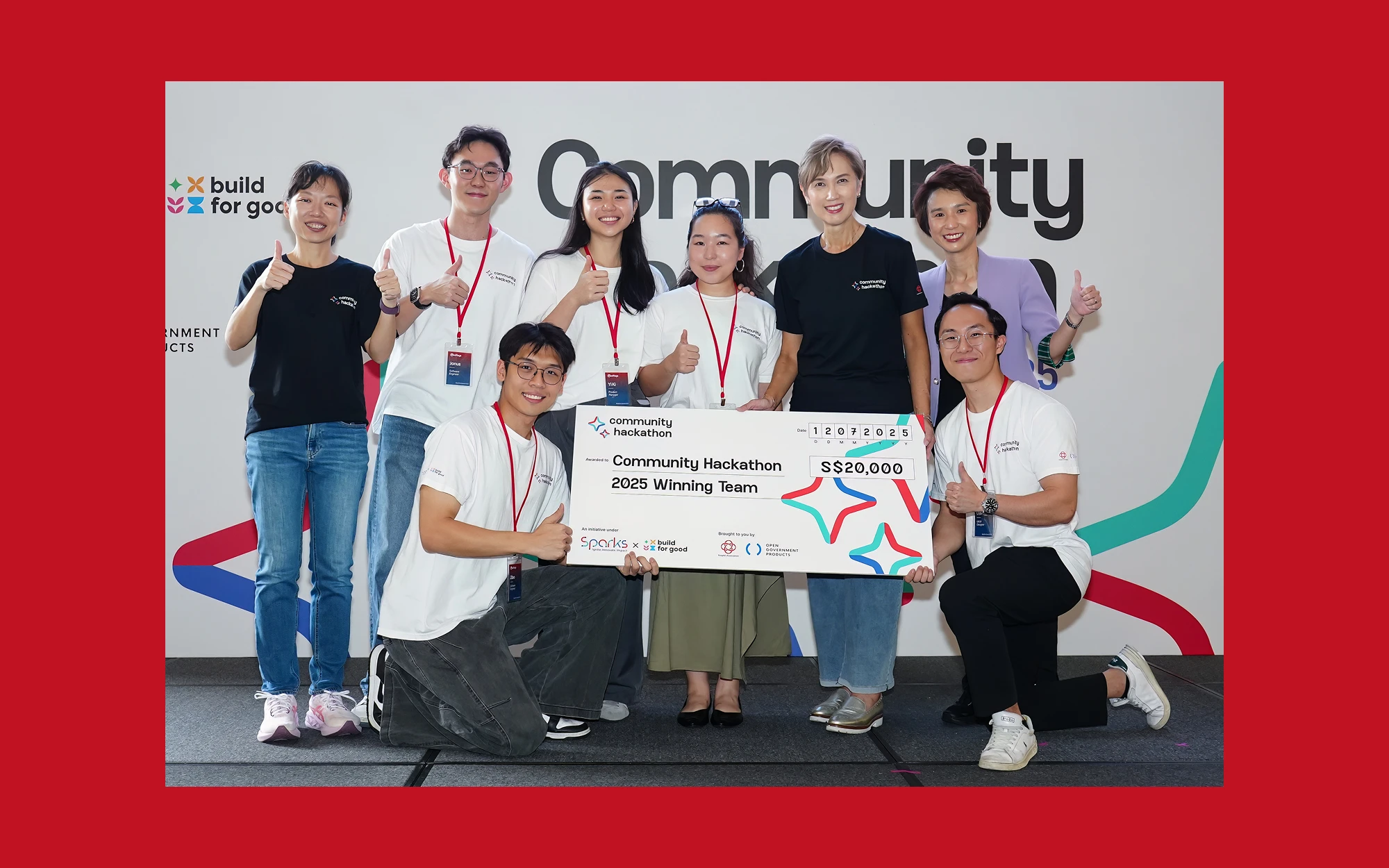
Redflags started at the 2025 Build for Good Community Hackathon, co-organised by Open Government Products and the People's Association. The prompt was to design for a real social need.
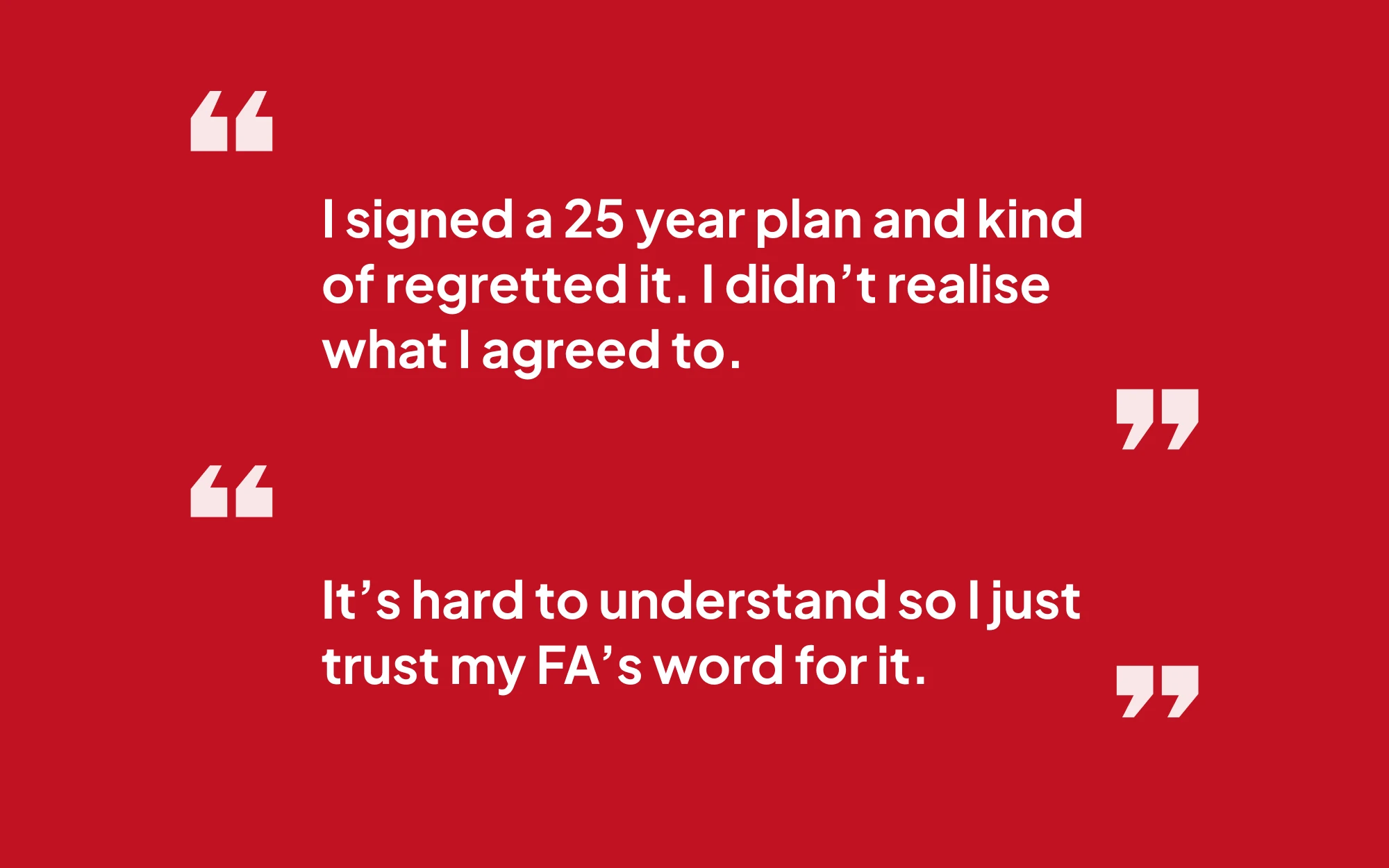
The problem came from within the team: one member had recently signed an insurance policy without fully understanding what they were agreeing to. It wasn't an unusual experience. Young adults entering financial independence regularly encounter insurance and investment contracts filled with specialised terminology, lengthy clauses, and no easy way to ask the right questions. The consequences of misunderstanding can be expensive and long-lasting.
The team placed in the top 5 of 21 competing teams and was selected for the Accelerator Programme, receiving $20,000 in funding to continue developing the product. The project was also referenced in a Straits Times article on investment-linked plans.
Research and Validation
During the hackathon, we ran interviews with other participants and distributed surveys to young adults who had previously dealt with financial documents. The goal was to validate our assumptions about the problem before committing to a design direction.
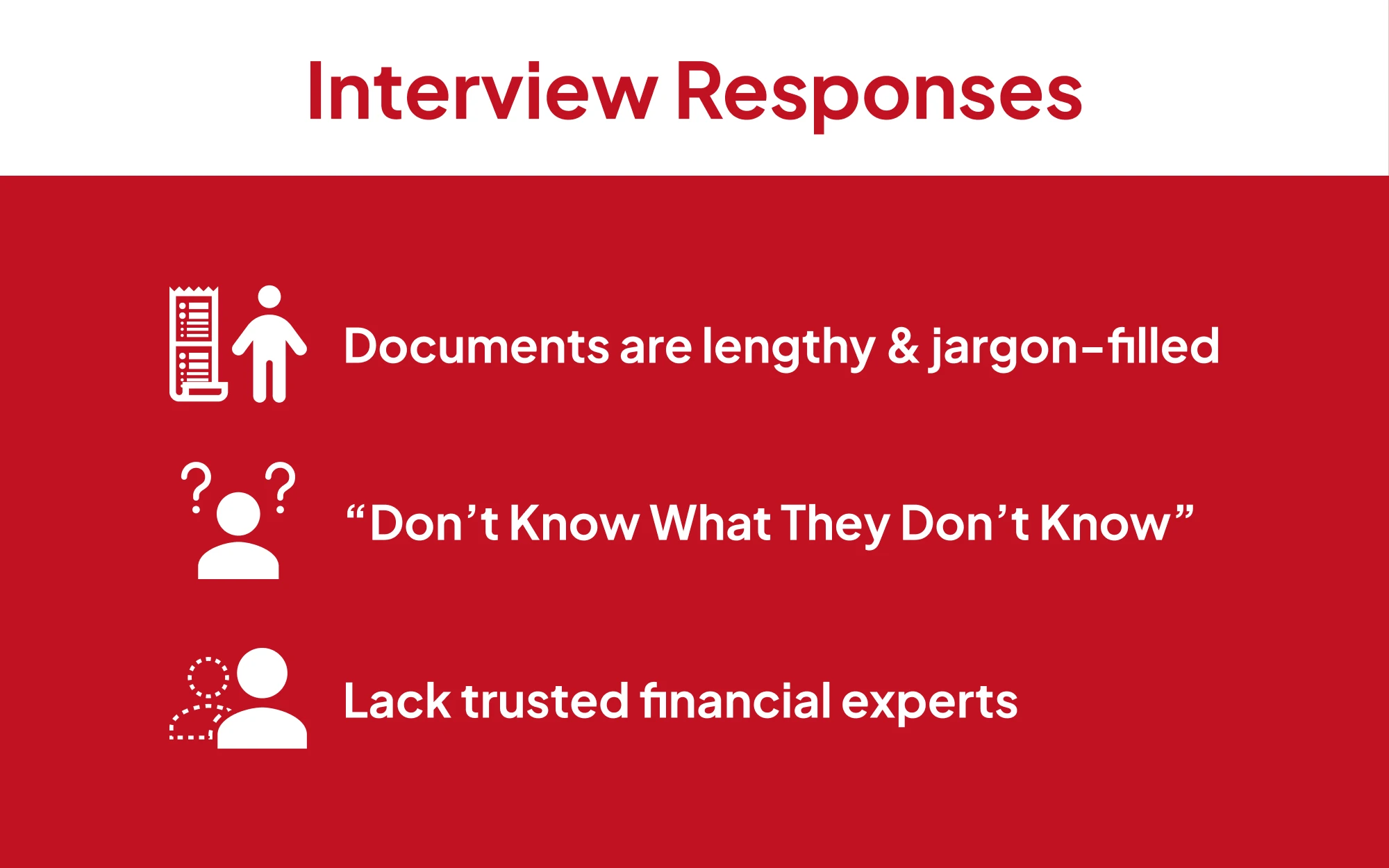
Finding 01
Financial documents are too long and technical — most young adults don't know where to start
Finding 02
Users struggle to ask the right questions because they don't know what they don't know
Finding 03
Most have limited financial literacy and no reliable access to professional guidance at the point of decision
Design
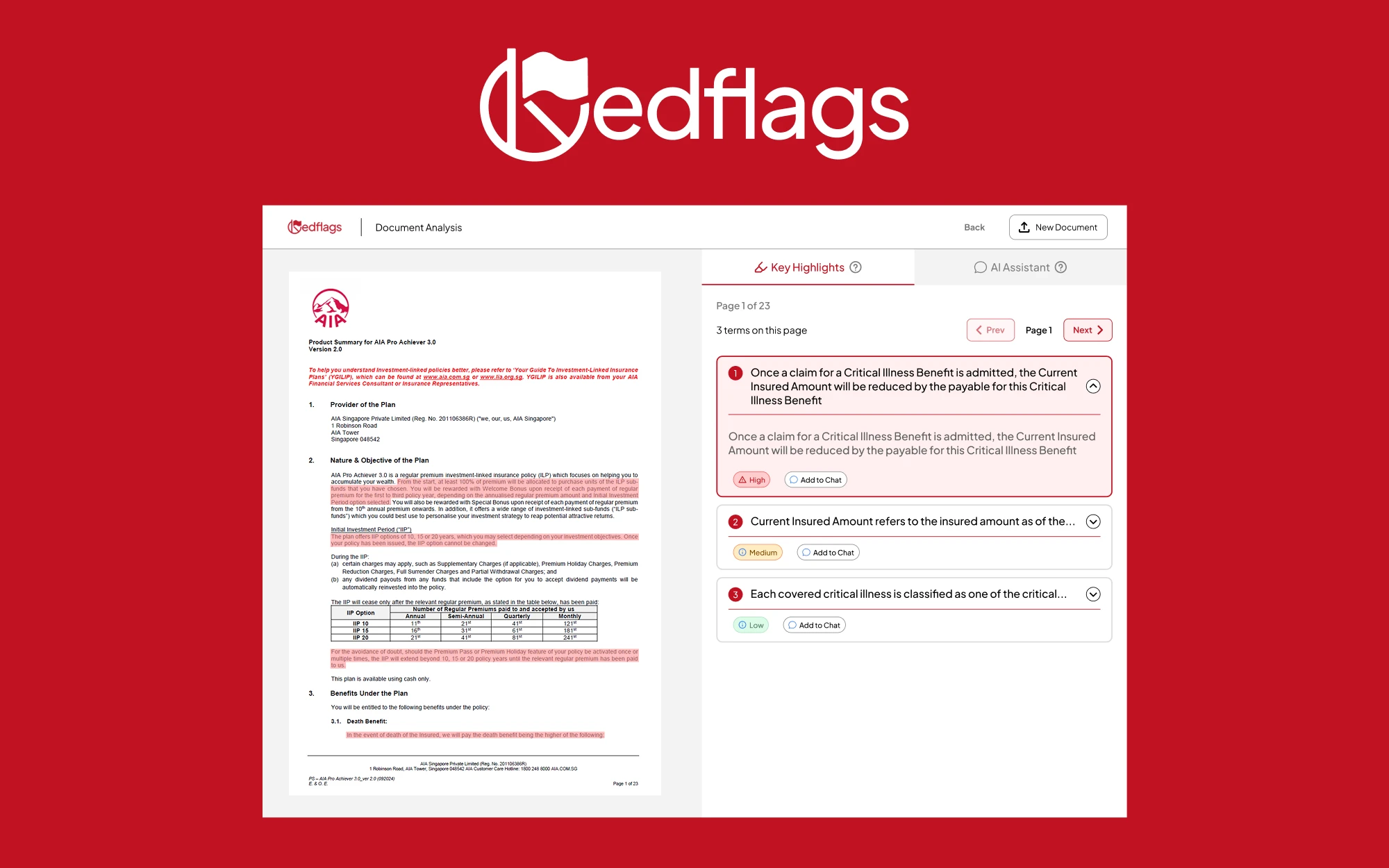
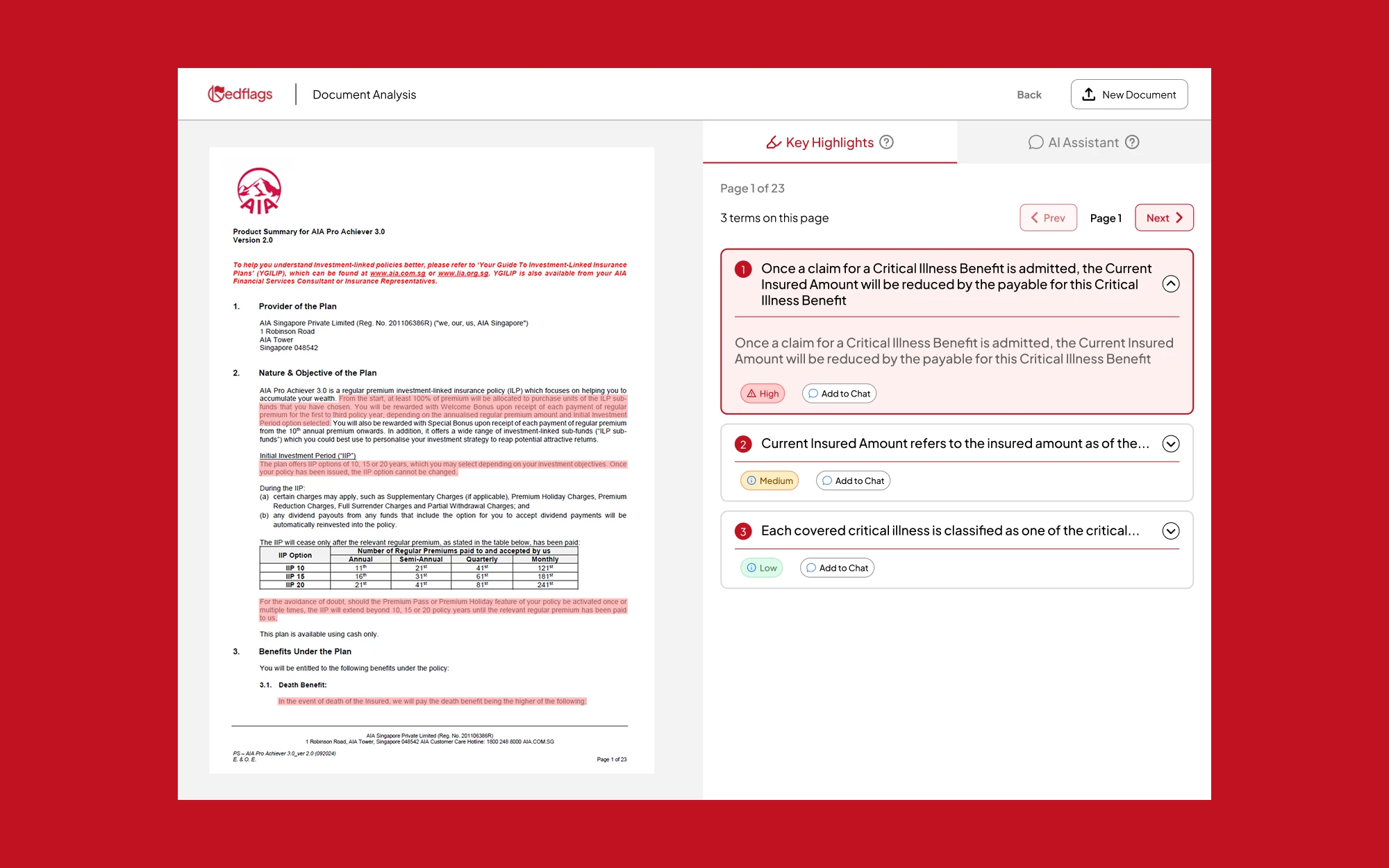
We built a web application that uses AI to examine financial contracts, surface critical clauses, and translate complex terminology into plain language. The design centred on three core features.
1. AI analysis with document highlighting
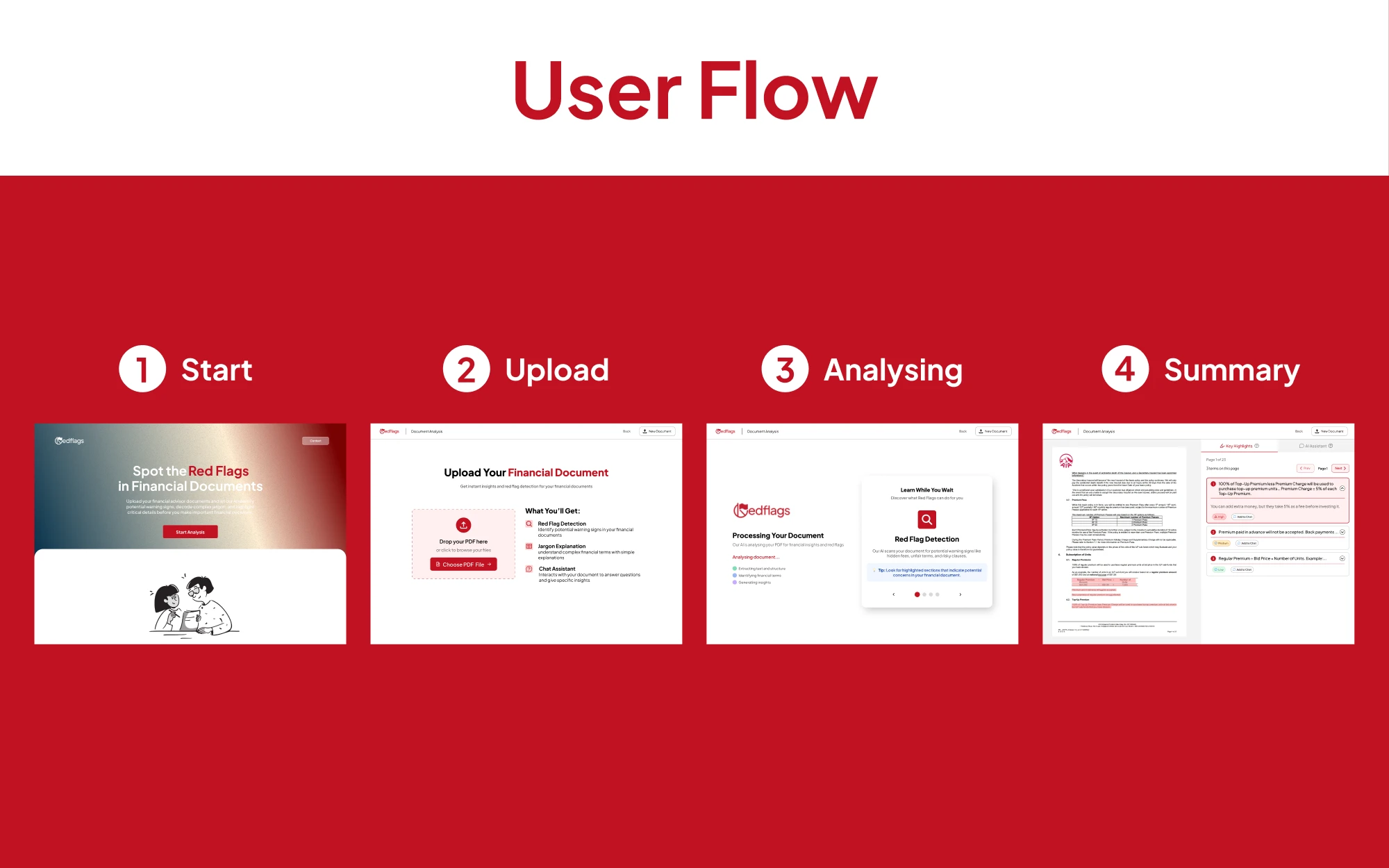
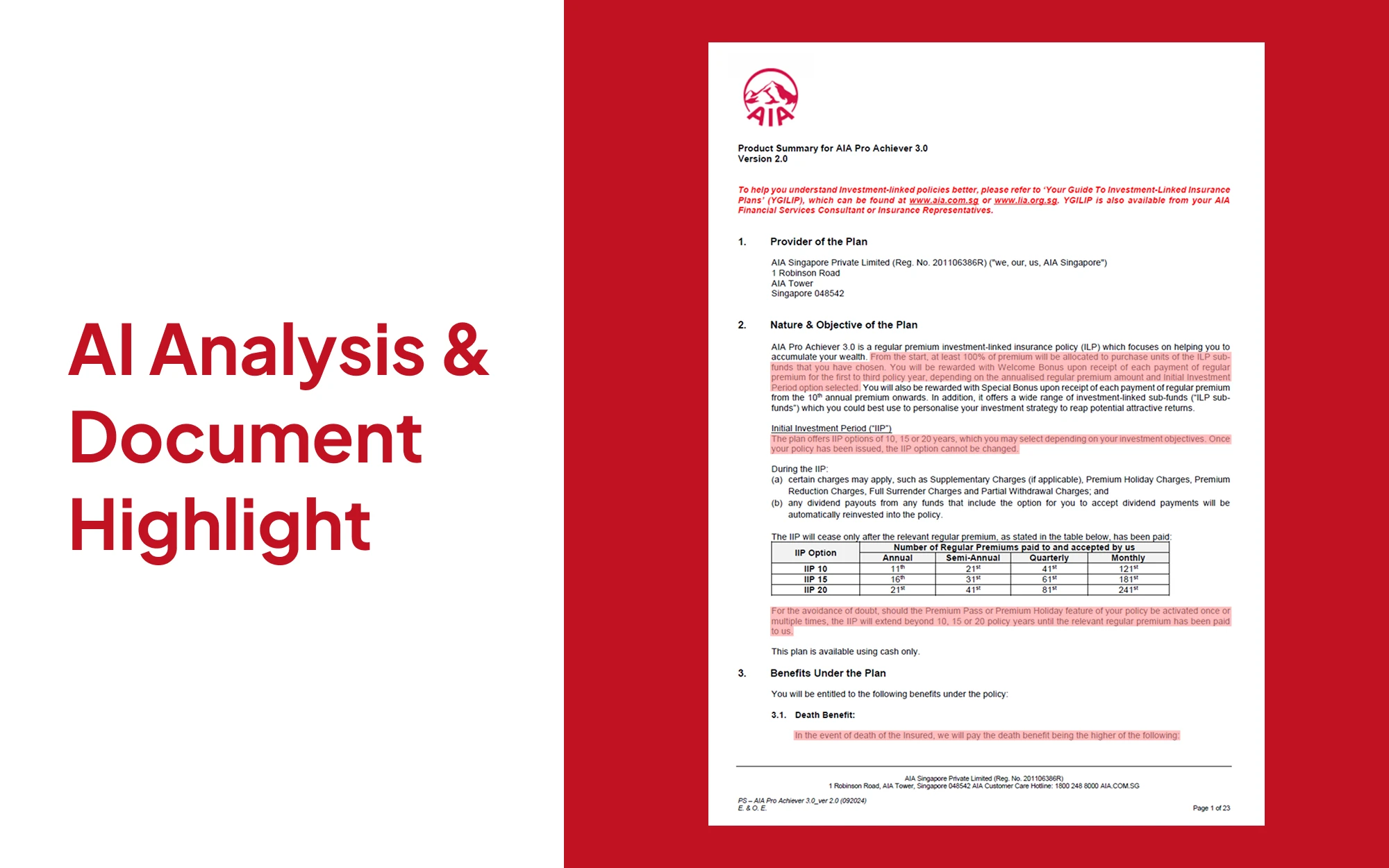
The tool identifies critical clauses and highlights them directly in the original document. Users can see exactly what the AI is referring to, pairing its output to the source material. This was a deliberate trust decision — AI was positioned as a reading aid, not an authority, reducing the risk of users blindly accepting a summary they hadn't verified.
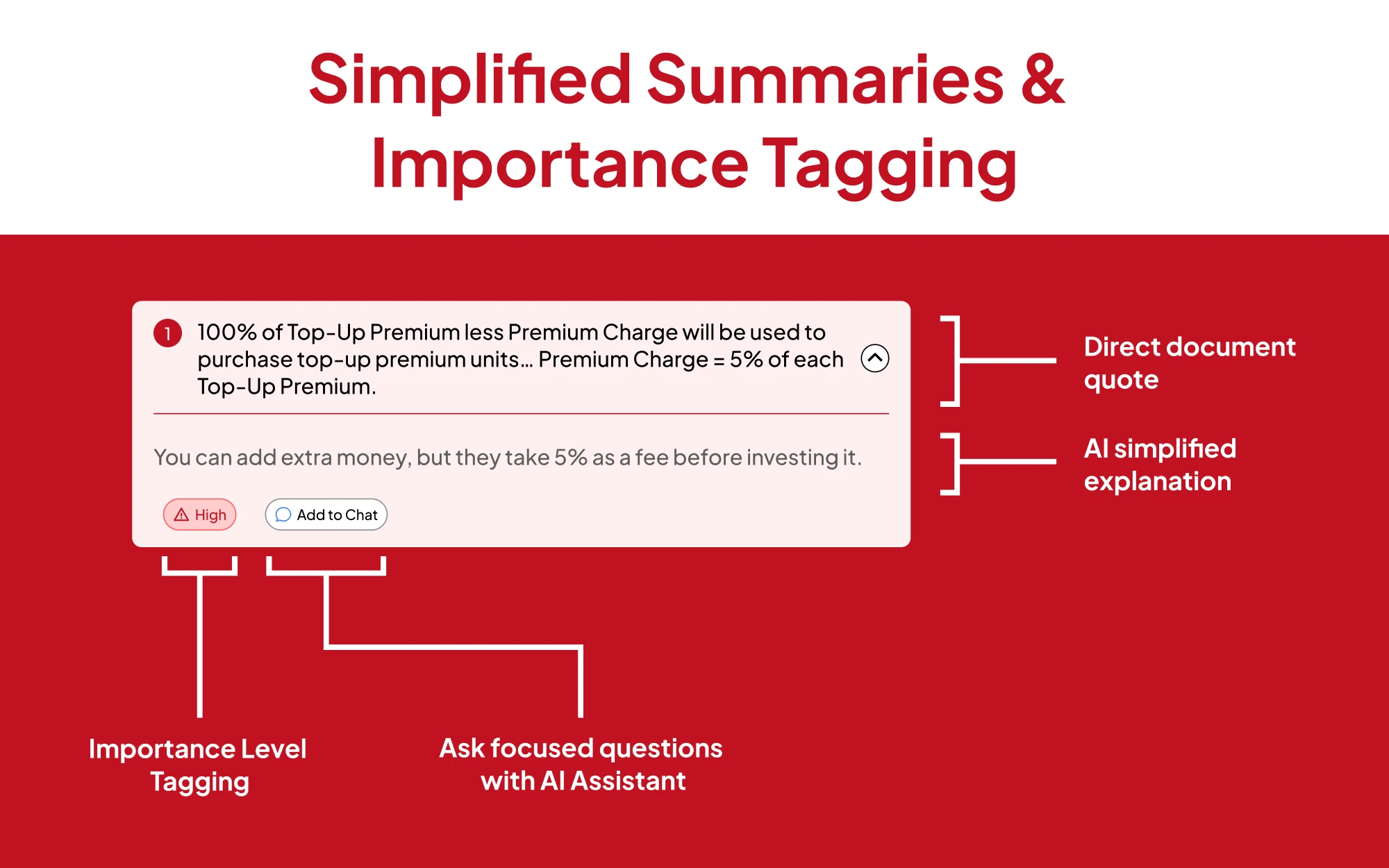
2. Simplified summaries with importance tagging
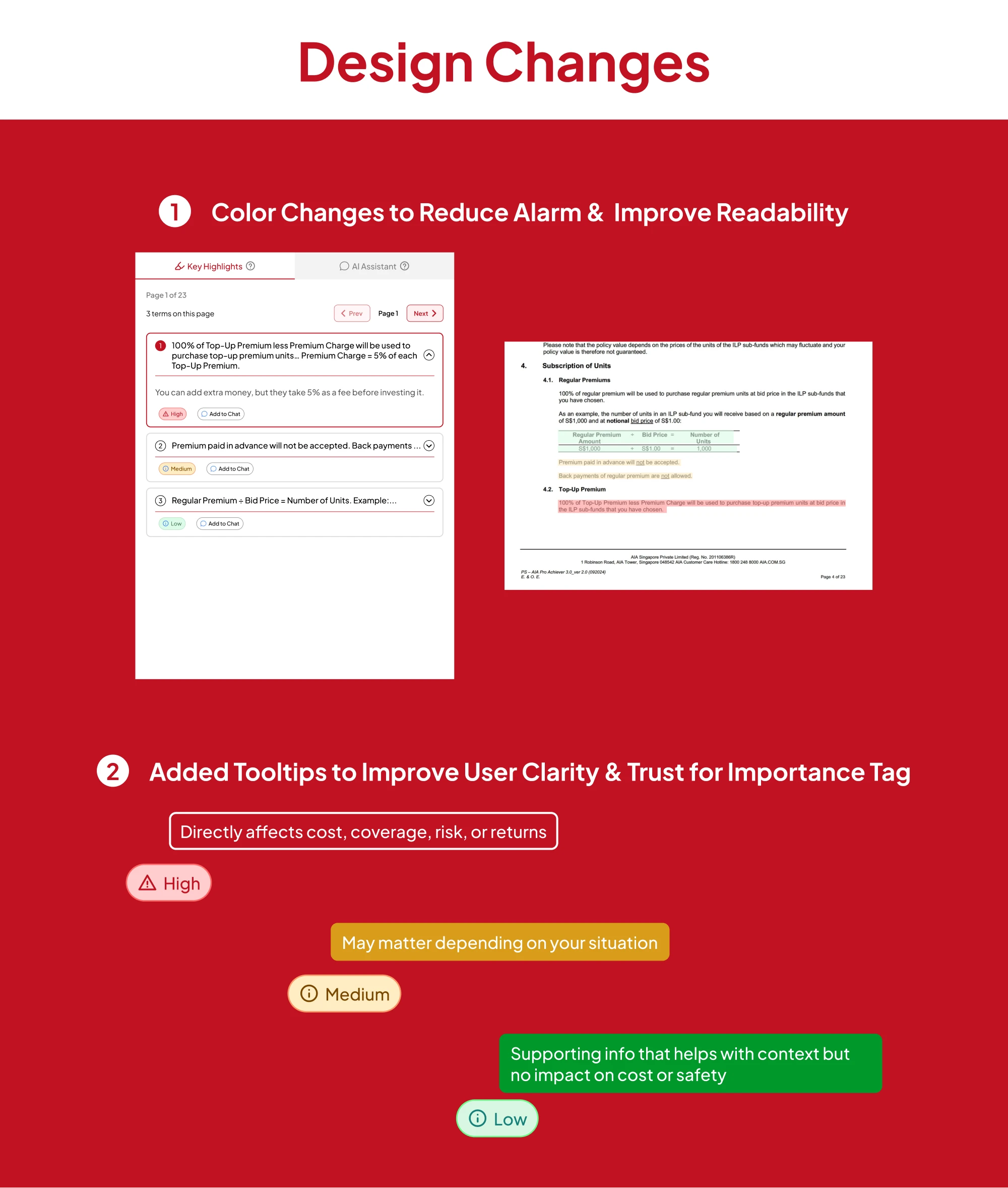
Each flagged clause is translated into plain language, tagged by importance level, and displayed in a scannable format. Small copy and formatting choices made a significant difference to comprehension here — how a clause reads determines whether it actually gets read.
3. AI assistant with guiding questions
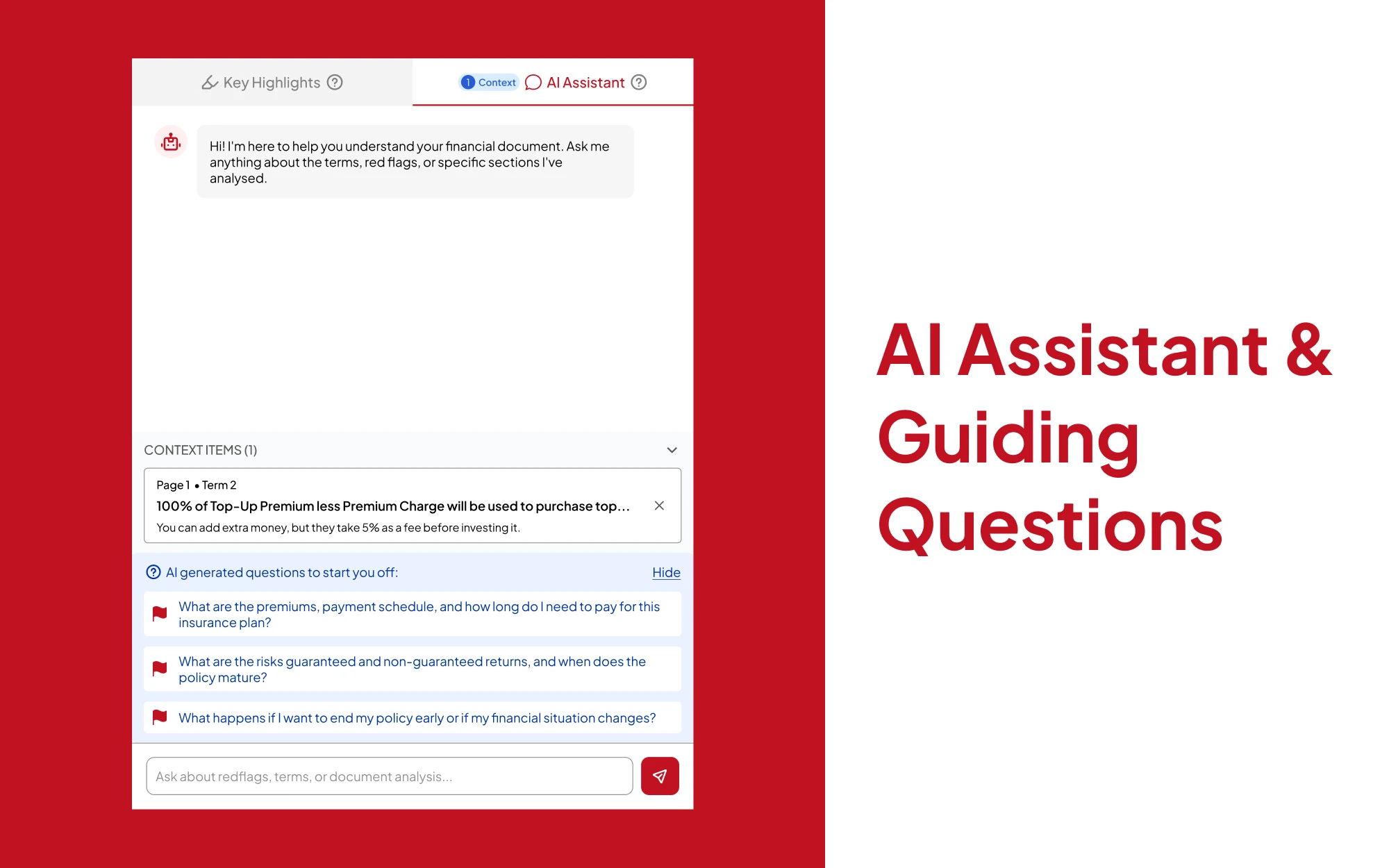
One of the research findings was that users couldn't formulate the right questions because they didn't know what they didn't know. The AI assistant addresses this by surfacing suggested questions relevant to each clause, giving users a starting point for follow-up with their financial advisor.
The Pivot
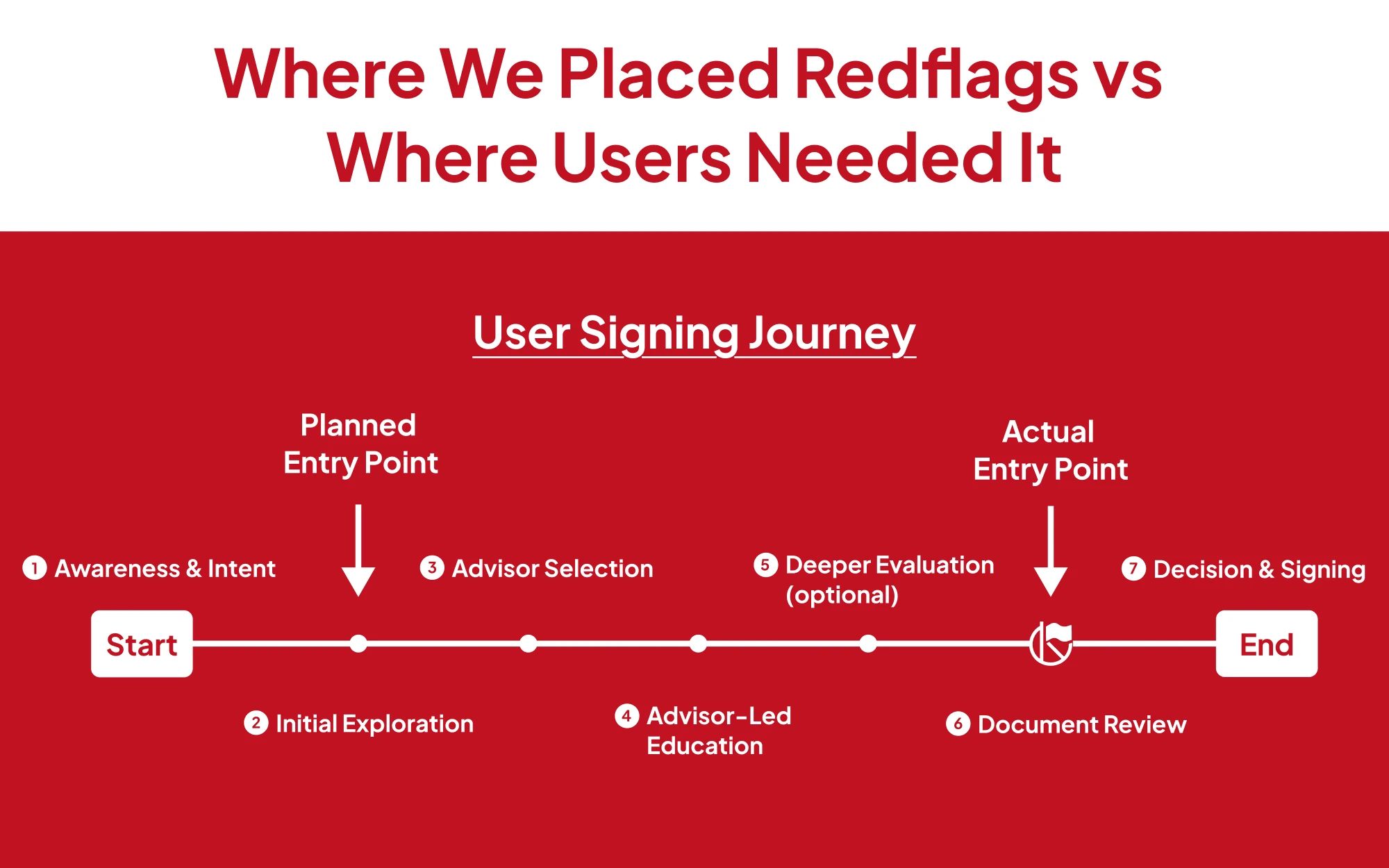
Our original assumption was that users would engage with Redflags during the research phase — browsing policy options before meeting a financial advisor.
Usability testing with three young adults at different levels of financial literacy told us something different. Most people don't encounter the actual contract documents until they're sitting with their advisor, ready to sign. The research phase uses product summaries and illustration tables, not the full contract text.
This shifted where Redflags needed to live. The real moment of need wasn't before the meeting — it was in the meeting, immediately before committing. Introducing Redflags as a step right before signing gave users a structured pause to understand what they were agreeing to, rather than rushing through a document they couldn't read in time.
Testing and Iterations
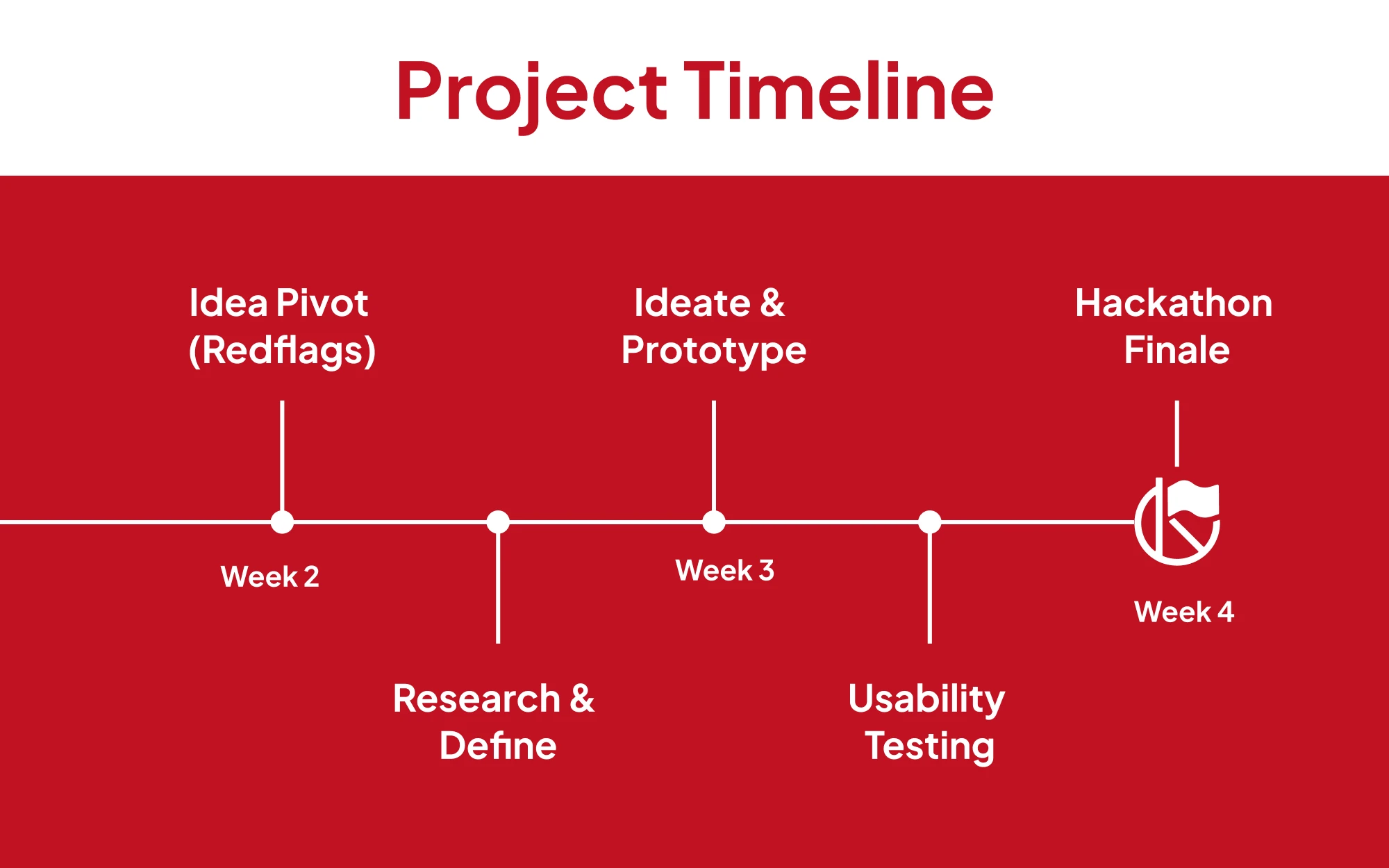
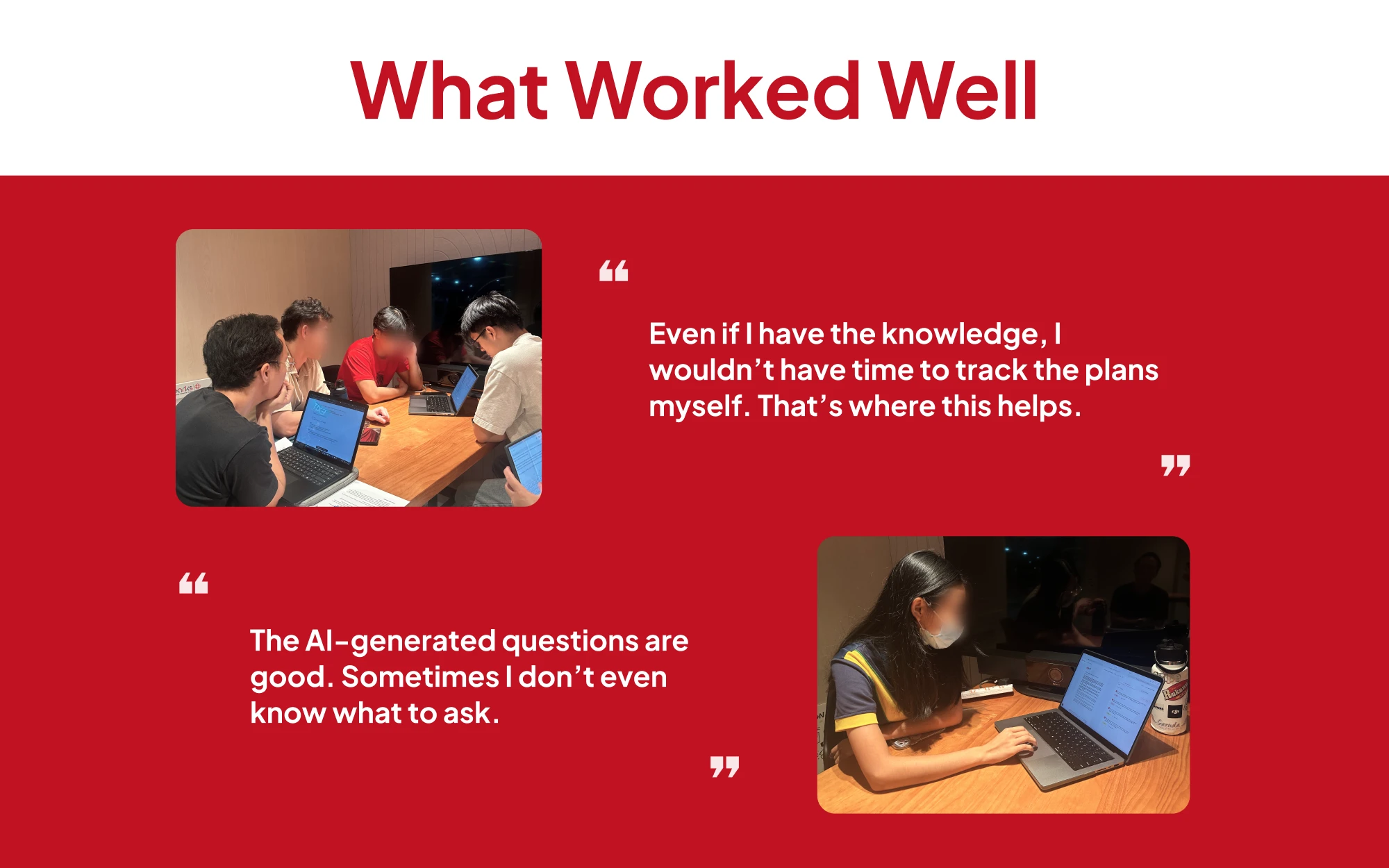
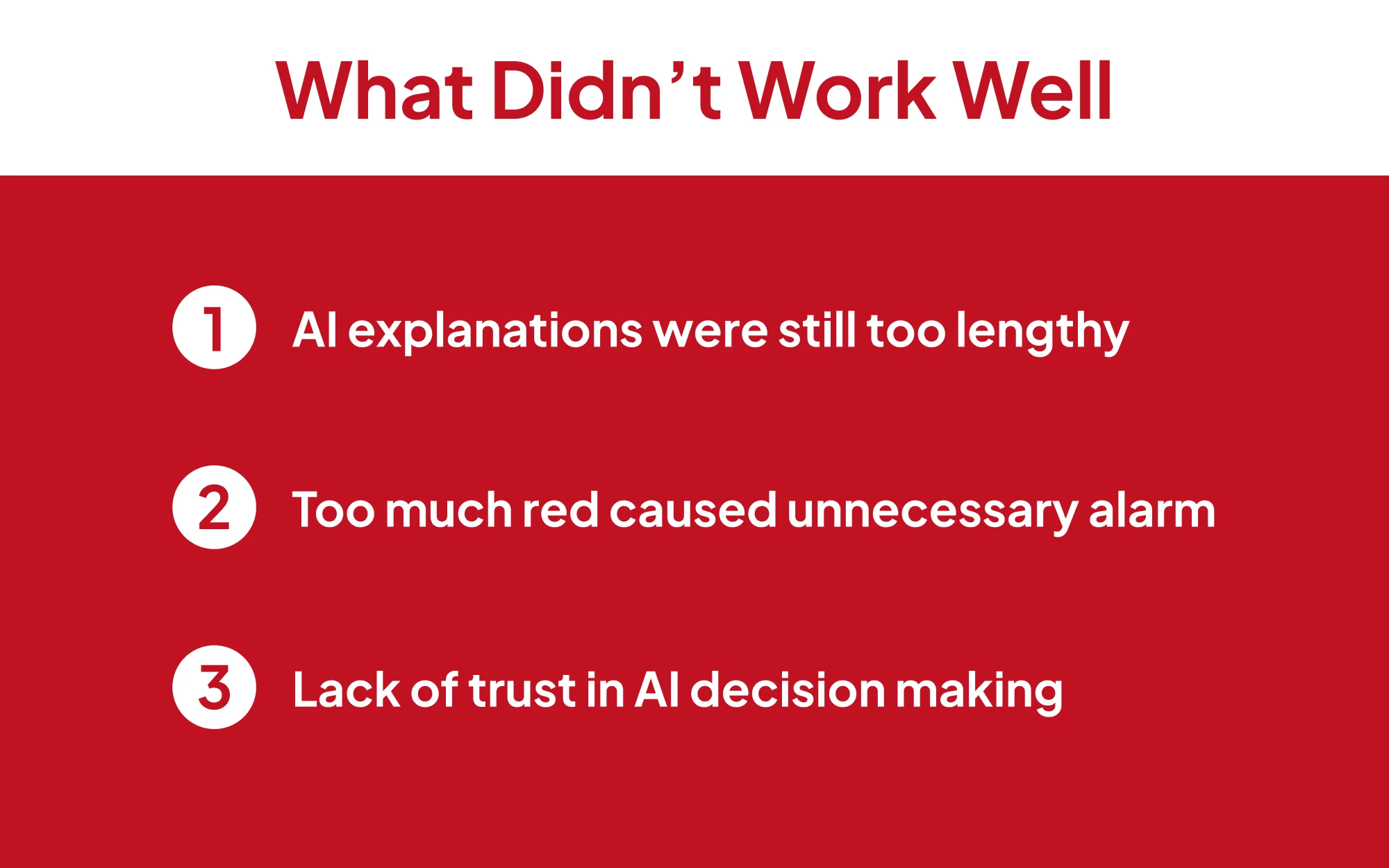
Usability testing ran across both the hackathon and accelerator phases. The hackathon gave us a proof of concept to test core assumptions. The accelerator gave us time to run more structured sessions, identify what wasn't working, and make targeted improvements before the finale.
Accelerator Programme
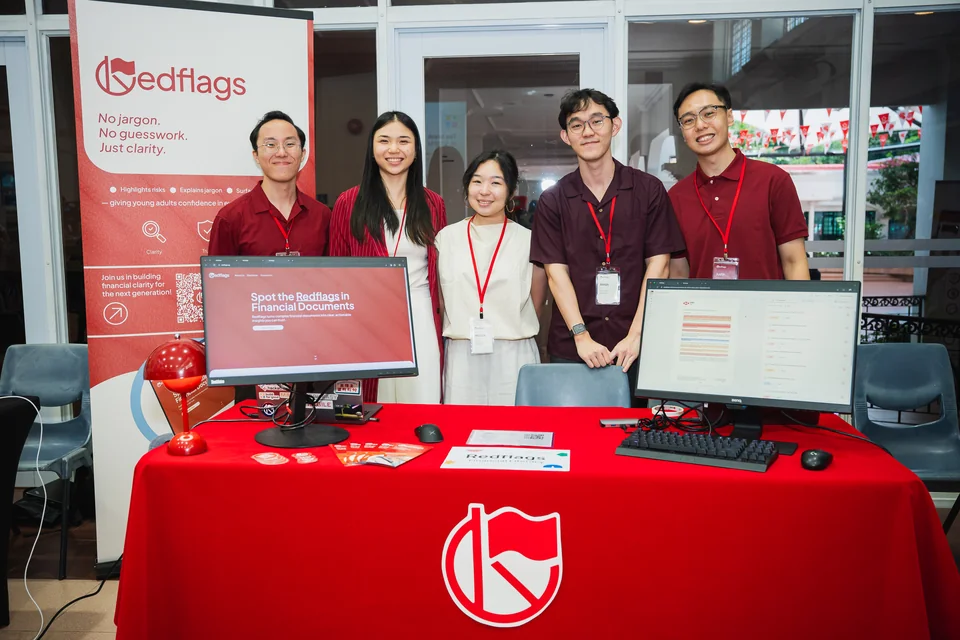
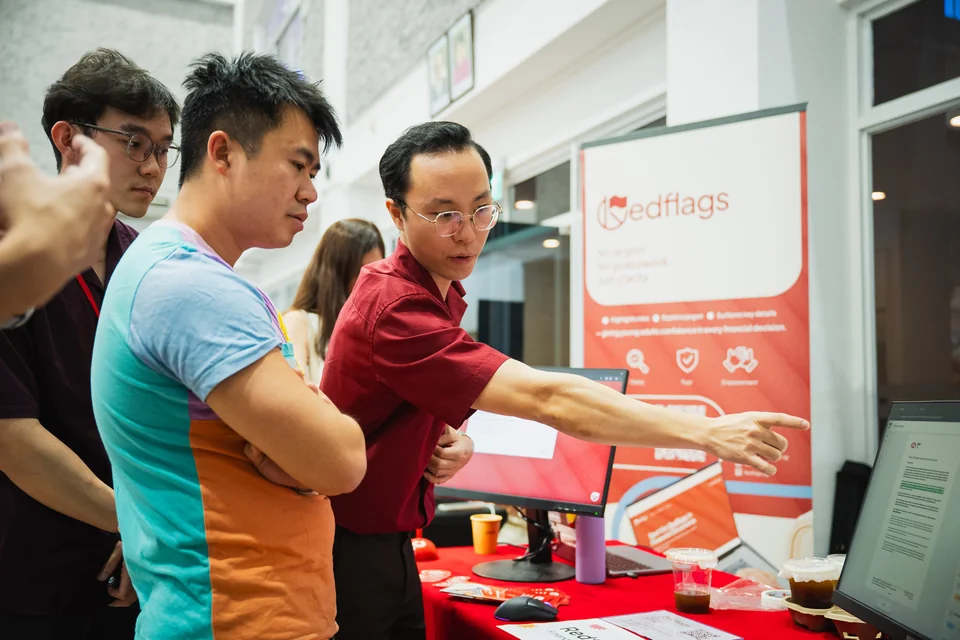
After the hackathon, the team spent two months in the Build for Good Accelerator Programme continuing to develop and test the product. We ran pilot sessions with users, iterated based on what we learned, and refined the product story for external stakeholders.
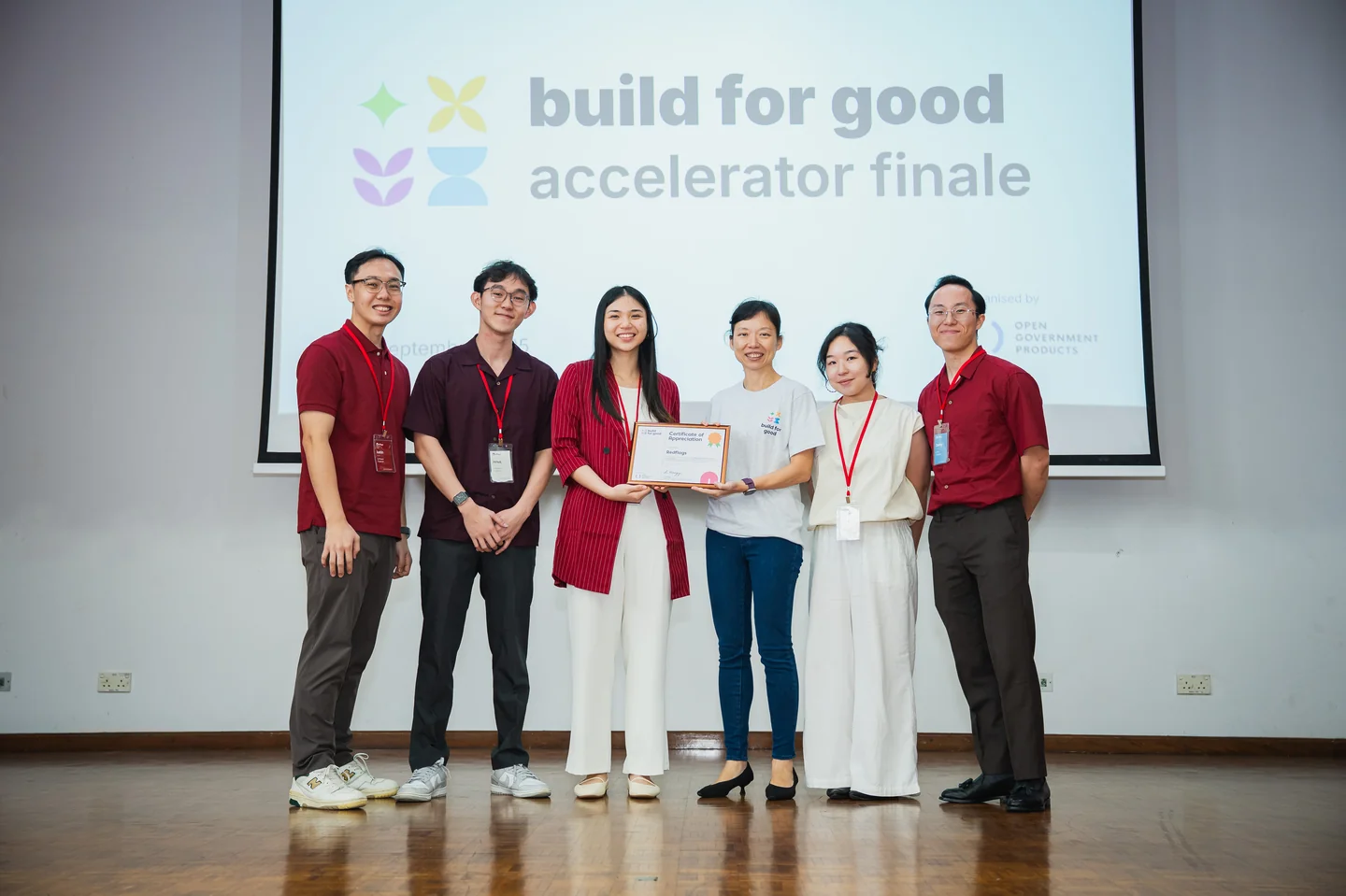
At the Accelerator Finale, the team presented Redflags to OGP stakeholders and potential partners. Following the finale, I stayed on for another month to support partnership outreach and design work before leaving the team in November 2025.
Reflections
Designing for AI trust is its own discipline
Building a product where users need to trust an AI output in a high-stakes financial context taught me that transparency isn't just an ethical consideration — it's a design feature. Showing the original source material alongside the AI interpretation reduced anxiety and increased engagement. Users felt in control, which made them more willing to act on what they read.
Small language changes have outsized effects
During testing, minor copy and formatting changes consistently reduced cognitive load more than structural redesigns. In document-heavy contexts, language is interface. How something reads determines whether it gets read.
Timing is a design decision
The pivot wasn't a product failure — it was the most important design decision of the project. Placing the tool at the right moment in the user journey changed what the product actually was: not a research tool, but a structured pause before a significant commitment. The intervention is only useful if it happens when the user still has the chance to act.